
Messages / Beyond the Surface
The Path of the Just
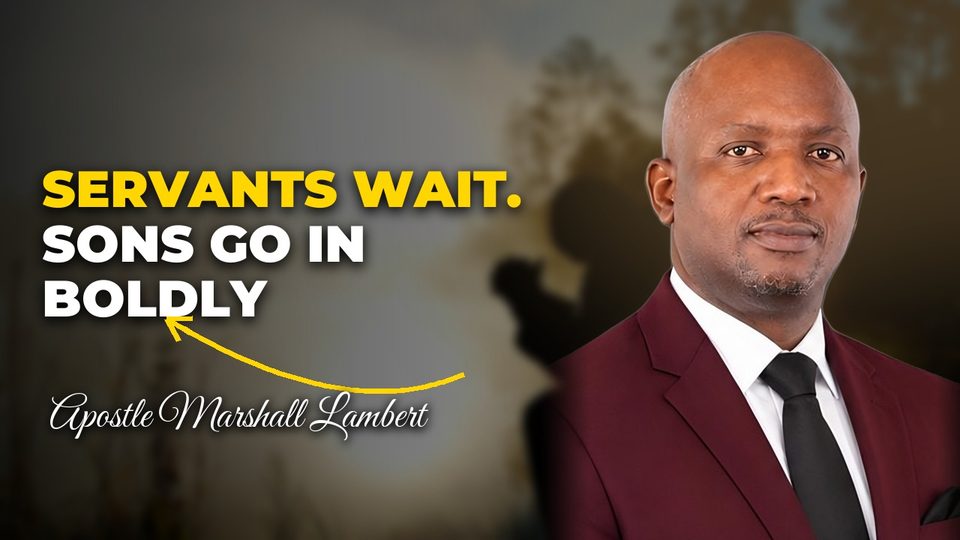
A servant waits. A servant asks. A son takes. On spiritual fathers, growth that is real, and making church a safe place for people who are lost.
Topics: Identity in Christ · Leadership · Family
Lines to remember
Key lines
We don't have a watered down version of Christianity.
He messed up, but he was a son.
A servant waits. A servant asks. A son takes.
Anything that is artificial doesn't grow.
Thirty years and still the same thing.
A leader is like somebody with a mop.
If the Lord wills? A son knows God.
Some persons find mentors. Okay. But we need fathers.
Inside this message
What he covers
- Recap: righteousness and the breastplate
- Like precious faith
- Peter the stumbler
- The prodigal still had the father's DNA
- Lying down in the road
- Servant and son
- All things that pertain to life and godliness
- Like a babe
- Artificial things don't grow
- My father in the faith
- A leader with a mop
- "If the Lord wills"
- We need fathers
- A safe space
- The men's conference
- Lost people need a compass
- Hurt people hurt people
- Jesus went looking for Peter
- "If they really want help, they'll come to me"
- Growth is not instant
- Two trees
- Read the instructions
- Add to your faith knowledge
- Self-control
- Steadfastness
- Brotherly affection
- Increasing
Scripture
Passages in this message
Read the full message
Cleaned from the live recording. Lightly edited for reading.
Recap: righteousness and the breastplate
It was powerful last week. We talked about the family book. We talked about the Christian DNA, and Christ as our righteousness. He became sin that we might be the righteousness of God (2 Corinthians 5:21). So we went down that line to pick up on righteousness, and on the saints moving from one level of glory to another level of glory (2 Corinthians 3:18).
It was even funny, because I remember one of the ministers was really having a struggle with this topic. He kept going back and saying that all our righteousness is like filthy rags, taken from the book of Isaiah (Isaiah 64:6). He couldn't correlate how we can be righteous and still at times make a blunder, sin.
So we got on to helping believers understand that you can be a citizen of Guyana and still do things that don't reflect positively on the nation. Or you can be a son living in the house of the father and have conflict with the father. That doesn't mean you're no longer a son. It just means the relationship has been broken. You're not on good terms.
In light of that, that's where we want to continue, because this whole topic came about to ensure that Christians have a very good footing. The Bible talks about us putting on the breastplate of righteousness (Ephesians 6:14). If believers don't understand this, you'll find they'll have many sorrows. The enemy will be able to pierce their hearts, pierce their liver, inflict real harm. Many times you find believers living with low self-esteem and confusion. The enemy has them living a Christian life that is up and down, or living in certain repeated cycles.
If believers understand this, I truly believe they'll know that there is no condemnation in Christ Jesus (Romans 8:1). That's the foundation. So when the enemy comes, when he shoots his darts of doubt and discouragement and starts saying to them they're worthless, and that's one of the things many Christians feel from what they go through, that they don't have any value, they will understand their value and their worth. There's a treasure inside, and because it's there, they learn how to live and how to walk from a place of victory and not defeat.
Like precious faith
(The host asks: how can we tell the difference between genuine spiritual progress and outward religious activity? Elder Jermaine answers first, then Apostle Lambert continues.)
Let me start here, because I love the book of Second Peter. It's a very powerful book. Let me read verse one. "Simon Peter, a servant and apostle of Jesus Christ, to those who have obtained a faith of equal standing with ours by the righteousness of our God and Savior Jesus Christ" (2 Peter 1:1). Or, to those who have obtained like precious faith.
When I first read that scripture, I was excited, because I realized contemporary Christians don't have something different from the early apostles. It's the same faith. Same grace. And when I looked at it I said, "Oh my God." We don't have a watered down version of Christianity. We don't have a watered down version of the gospel. We don't have a watered down version of the Holy Spirit working inside of us. It's like precious faith. And they were able to move from one level to another. They were able to grow. They were able to add.
Peter the stumbler
I think Peter is one of the best persons for us to look at, and here he is writing on this matter, because we know from the Bible how he stumbled. Jesus said before the rooster crows twice, you'll deny me (Mark 14:30). He used indecent language, he cursed, he denied Christ. He went back to his old way of life, his work.
This was a guy like many typical Christians who boast. I don't know if you know Christians like that. I was once like that. We boast of how good we are as Christians, what we wouldn't do, and that we're better than other people. Some of us don't say it verbally, but we act that way.
And after, we find ourselves in the same situation. You're going good, you're on a high, you're serving the Lord, everything is going properly, and the next thing you realize, boom. There's some besetting sin, something you stumble over, you hit yourself so hard. Sometimes it's a sin only you know about. Sometimes your entire neighborhood knows. And now you're hiding from your neighbors, you're hiding from God, you don't know what to do.
These are the people we're speaking to also. There are many who are watching us that need to come back home.
The prodigal still had the father's DNA
Like the prodigal son, you've messed up so bad. But just like the prodigal son, and this is why righteousness is so important, he understood that even though he was on bad terms with his father, his father's DNA ran inside of him. He messed up, but he was a son. So he knew he could return home. And he said to his father, even though I may not have the privilege of a son anymore, let me be like one of the hired servants (Luke 15:19).
So there are many prodigals watching us. You were serving the Lord one time, and you made a blunder. You've messed up yourself.
Lying down in the road
I was listening to my children talking about one of the young women from the church, I can call her one of my other daughters, . She was walking down Regent Street, she had just purchased food, and she tripped and landed on her face. She said she was so ashamed that she just lay down there. She didn't want to get up for a few seconds. People had to come and ask, "Are you okay?"
Many times that's how we are as Christians when we mess up. We lie down in the sin, in the problem. We're so ashamed. We don't know how to talk to people. All we want to do is hide our face, or disappear. And because of this, many persons' relationship with God goes downhill.
So here we are, somebody like that. Somebody who stumbled, messed up, and it was public. Matter of fact, many times when you think you're doing things in secret, you're the only one who thinks it's secret. Everybody else knows. And they allow you sometimes to think they don't know what is happening.
Servant and son
Here's what Peter said in verse two. "May grace and peace be multiplied to you in the knowledge of God and of Jesus our Lord" (2 Peter 1:2). That's what we speak over your life. This is very important. Many times Christians suffer certain things because they don't understand the knowledge of our heavenly Father and our Lord Jesus Christ. We feel everything needs to be of works.
I hear a lot of people say, "I'm a servant of the Lord." That's so true. But we're sons also. And if we don't understand both dynamics and how they operate, we'll find ourselves in problems. A servant waits. A servant asks. A son takes. A son receives. A son just knows he will get it. It belongs to him. There are certain things in the home the son just knows. If this belongs to Daddy, or this belongs to Mommy, by extension it belongs to me.
All things that pertain to life and godliness
Here's what it says from verse three. "His divine power has granted to us," to everyone who will believe, who calls upon the name of Jesus, "all things." Not some things. All things "that pertain to life and godliness" (2 Peter 1:3).
So go back to the question: how can we tell the difference between genuine spiritual progress and outward religious activity? We go back to here. Is it the power of God working through us, and are we seeing an outflow of His type of life, His type of living, and godliness?
"Through the knowledge of him who called us to his own glory and excellence." When somebody is saved, you must see excellence. They must move from one level of doing things to another. "By which he has granted to us his precious and very great promises, so that through them you may become partakers of the divine nature, having escaped from the corruption that is in the world because of sinful desire. For this very reason, make every effort to supplement your faith with virtue" (2 Peter 1:4-5).
So we know when this thing is genuine and it's not just outward. You see progression. You see addition. You see the life being supplemented and moving from one level of glory to another, one level of excellence to another. Supplement your faith with virtue. There must be a development of your character. You must see certain outflows.
Like a babe
It's just like a babe. They're in your arm, and next thing you notice they start to pull themselves up, start to look around, turn around. Then you place them on their back and they don't want that, they want to see what's happening. Then they start to make some movements. They turn over. Then they start creeping. They're adding. There's a progression. Then they start to hold on to things and move around, and then they loose off and they start to walk. It's a daily progression.
And as they do that, what do we as parents do? We supplement their food. It's no longer just breast milk. It's no longer just formula. You give them a little crushed food. You start to supplement because they're growing.
Just like with believers, there must be some supplement. There must be some addition, some progression in our walk, for us to know it's not superficial.
Artificial things don't grow
Anything that is artificial doesn't grow. If you look at some of these flowers here and come back next week, you realize it's the same height, same color. You come back a year after, it's the same thing. It's artificial.
And you have a lot of Christians like that. When it's artificial, there's no root. One year, two years, three years, five years, thirty years, and still the same thing.
(Elder Jermaine shares a testimony of how Apostle Lambert fathered him back to God about five years earlier.)
My father in the faith
Listening to you speak, you make me feel I'm doing a good job as a father. But I was able to do that because of my father, Apostle Ellsworth Williams. He fathered us. I was a real religious hard-up guy. I would never have been able to help people without him.
I remember some situations in the church at Heavenly Light. You'd see some people and see something, and you know in other churches they'd put them on discipline, put them out. I remember Apostle Williams saying in one of the leadership meetings, "If I do that to this person, how will that help them? All it will do is expose them in a greater way to the enemy, and their life will turn worse than it is at present." That changed my perspective on how we look at people and how we value people.
A leader with a mop
There's something else he taught us in Bible school. He said a leader is like somebody with a mop. You have people in front of you walking through a room with diarrhea, spraying all over the place, and the leader walks behind with the mop, so that when they reach the other end, nobody can know they made a mess of the place.
When you have a spiritual father with that kind of perspective on leadership, it helps you. I was growing too, just like a babe. I messed up. Somebody had to clean me. And sometimes even when we get big, we get diarrhea. We mess up. You go to school and you make a mess of yourself, and some good friend helps to hide you and makes sure you're cleaned up. That's where we need fathers who are able to do that for us. Mothers and fathers in the kingdom.
I wasn't born good. Yes, I had the righteousness of God, the nature of God, but I also had to go through the training, the progressive stage of growing. And I had someone there. We got saved under Apostle McGovern. He set the foundation for us in humility and holiness, in character. When we were over at Heavenly Light with Apostle Williams, he laid the foundation of sonship.
"If the Lord wills"
If we don't understand that part, holiness and humility are important, but when they're not done in a certain way, they can lead to a servant mentality.
You want to hear a servant mentality? "If the Lord wills." A lot of people like to say that. "God willing." A son knows God.
You go about, and everywhere you hear somebody saying, "If the Lord wills, if the Lord wills." His thought toward me is to prosper me and give me a good future (Jeremiah 29:11). There are certain things you don't have to ask. You know your mother and father want good things for you. Of course at times you ask them, "Can I go here? Can I do this?" But mature sons and daughters start to operate this way: "Mommy, I'm going here. I'll be back at this time." Because you have that level of confidence in them, and they have that level of confidence and trust in you.
So I'm trying to help us understand. When "the Lord's will" is all through someone's life, there is an issue. There's a servanthood mentality. They need to mature and grow and embrace sonship.
We need fathers
(The host adds that spiritual progress needs uplifting people around us, not only the Holy Spirit.)
Yes, we need persons in our life. It's very dangerous otherwise. It's not good for somebody to walk alone. It's better when two walk together (Ecclesiastes 4:9). There's safety in a multitude of counselors (Proverbs 11:14). But we need fathers. Paul said you have many instructors but not many fathers (1 Corinthians 4:15). Some persons find mentors. Okay. But we need fathers. People who can look you in your face and tell you, "Hey, this is foolishness."
I remember one situation Apostle Williams said, "Lambert, you need to stop this foolishness." I didn't take that in a bad way. I took it in a good way, because I pulled myself together. Fathers are able to tell you. Sons are able to receive correction.
Every great person in the Bible had someone to walk alongside. Either they were fathering somebody or somebody was fathering them. It's a principle in the Bible. It started with Adam. God came down in the cool of the day and met with Adam (Genesis 3:8). From the opening of the Bible, God never just left him alone without fellowship.
A safe space
These persons are not only for when you have problems. Apostle Williams shared something with my wife and me that really helped us. A particular guy came one day and asked if he could come over. He lay down in the sitting room on the floor, didn't say anything, slept, woke up and said, "I'm okay now. Thank you."
Sometimes it's just those little things. He didn't have to say anything. This guy just wanted a safe space. And we need to ensure people can find a safe space. It's not all the time talking. This is a safe space. I can be vulnerable with these people. They won't judge me. They won't criticize me.
The men's conference
Apostle Williams sent us out as a team to a particular place, and we were having a men's conference. One of the leaders of the church started to share what was happening in his home. His daughter had a young man, they weren't married, and he allowed him to live downstairs. One of the guys on our team started to rebuke the man in the meeting, because as a leader in the church he shouldn't have that in his house.
And I rebuked that leader who was with us. I know he was angry.
Later we were sent out to another church out of town, and Apostle Williams asked me who else I would take, since the other leaders weren't available. I said this same young man. We were sitting before one meeting where we were staying, and he said to me, "I was very angry with you. But I understand. I understood what you did."
Why did I have an issue with what he did? Because having a father like Apostle Williams, we learned to understand what Jesus did when the woman was caught in the act of adultery and they all condemned her. "Let him who is without sin cast the first stone" (John 8:7).
Lost people need a compass
This is what I said to him when we were sitting. When somebody is lost, they don't need anyone to say to them, "You're stupid. How come you didn't know where you were going? How come you didn't walk with a map?" That's not helping the situation. They need somebody with a compass, or somebody with knowledge of the terrain, to point them in the right direction.
They would have already been beating themselves up. "I should have thought about this. Why didn't I do this? I'm so foolish." The enemy is already tormenting them. Don't add insult to injury.
They need someone to say, "Okay, I was in the same boat as you one time. This particular juncture here is tricky. When you reach here, it looks like it can go here, it can go there, and all the trees look the same. But you know what? Look at the sun. See where it's rising from, or where it's setting. This is how you know which direction you need to head."
So when that person reaches somebody else who is lost, they'll know not to tell them they're stupid. They'll say, "I remember this person told me this is how you find your bearings." And they lead people forward.
Hurt people hurt people
Just like Apostle Williams, these things we learned. He showed us how to lead, and we show people how to lead. Because if you just beat up people, criticize people, make them feel worthless, it's not helping the situation. Matter of fact, those people will most likely go away thinking that's the best way to deal with people, and they'll go back hurting people.
That's why sometimes you find yourself in a church setting, or in any room with leaders, and some of them can belittle people, make you feel small, insignificant, not valued. I know this is a different slant on righteousness. But this is also growing and walking in righteousness. There's an aspect of righteousness where even though we know persons are wrong, we don't belittle them. This is righteousness in action.
Jesus went looking for Peter
One of the things I learned from Jesus and Peter's situation, the Peter who wrote this. When Jesus rose from the dead, He asked for the apostles, and He asked for Peter by name (Mark 16:7). And then He went looking for Peter. They were fishing. When Peter saw Him, he wrapped himself in his clothes and jumped in the water. He recognized his master, his friend, his father.
He sat with him and asked Peter, "Do you love me?" Peter said, "Yes, I love you." He said, "Feed my sheep." He asked Peter again, "Do you love me?" Peter said yes. He asked him a third time and Peter broke down. It hit home (John 21:15-17). The Peter you saw on the day of Pentecost was a different Peter.
There are many persons who should be in the kingdom doing the work of the Lord, but because they blundered and messed up, they were written off. Nobody sat with them and allowed the Lord to use them to work through it and really get to their heart.
I remember one young man right here in the mentorship program, in tears, said he's here because I sent to call him. He was in the world. He was so ashamed of what he did that he couldn't bear to come back to church, knowing the people who used to look up to him.
When we understand these things, we understand why Jesus shared the parable of leaving the ninety-nine and going after the one (Luke 15:4). Peter was a very good example of that one. And we have many Peters, and Patricias, in the same boat.
"If they really want help, they'll come to me"
So there's a difference between a show of righteousness and growing in it. Many times we talk about it from the side of the believer, but I'm talking about it from the side of the leader also. Where you swallow pride, and you go after them.
Sometimes you hear leaders say, "If they really want help, they'll come to me." In a sense, I'm the boss, they're the subject. But when you understand righteousness from the context of the Father's heart, we approach people in a different manner.
Growth is not instant
(The host asks how Proverbs 4:18 challenges the idea that spiritual maturity happens instantly. Elder Jermaine reads the verse (Proverbs 4:18, Amplified) and shares his own growth in forgiveness.)
I remember Elder Ayana Jeffrey. Sometimes she used to make me laugh. She'd come and say, "Pastor, I gave him a piece of my mouth, a good licking." And I'd smile and say, "You know you're going to have to apologize to the man." She'd say, "That's all right, Pastor." But in the latter stages of her life she would say, "I've really grown. A while ago, Pastor, you know what I would have done."
That's the question you asked about this instant thing. When we get saved, we instantly have the nature, the DNA of our Father. Same faith as the apostles, same Spirit. However, life is a process.
Two trees
God gives everybody in this world the same thing. Access to the same grace. Access to the same prize at the end. To reach that prize, He said there are gifts, there are tools you all have access to. If you choose life, this will be the outcome. If you choose death, this will be the outcome (Deuteronomy 30:19). He set the rules and gave everybody time to live this life. He gave all of us a rule book in case you don't remember: I've written it down for you. Go back and check the Bible. I give you freedom to choose.
There's a tree of the knowledge of good and evil. There's a tree of life (Genesis 2:9). Only eat from the tree of life and you live forever. That's the gospel right there. Jesus is the way, the truth and the life (John 14:6). He is the life. Just choose this one.
The tree of the knowledge of good and evil, don't trouble that one. That's a mixed tree, a perverted tree. Don't partake of the fruit or the substance or the nutrients from Satan. If you continue to choose this one, you have a glorious life. If you choose that one, you'll die. That's hell. That's the gospel in a nutshell.
And He put you in a place where you have everything, paradise. Everything that pertains to life and godliness, He's given it to us. We need to understand this: Jesus died for everyone. He didn't die for Christians only. Everyone. So according to God, nobody should go to hell. Nobody should experience eternal death. He made provision through Christ Jesus.
So now it behooves you to partake daily from the tree of life. That's how we do it. We pray and read the word of the Lord. We share the gospel. We do things that enhance our life.
Read the instructions
And this is where we get back to Peter in verse five: make every effort to supplement your faith with virtue, and virtue with knowledge (2 Peter 1:5).
If you don't read the instructions, you can't complain if the product doesn't work according to specification. Some Christians don't read the Bible, and then they don't understand why their life is like that, why the enemy can turn them like that, why they're struggling in this area. And they blame God.
The first thing Adam said when God asked him what he did: "The woman you gave me" (Genesis 3:12). We blame somebody else. But they all suffered as a result of it. Not because God didn't make everything perfect. He gave everything. And this is what's happening to believers. They have everything that pertains to life and godliness, but this is where you've got to supplement.
Add to your faith knowledge
Here's what happens to some Christians. They read the Bible only. But God created trees. God created structure. God created the moon, the sun and all these things, and He gave knowledge on it. Solomon wrote on a number of different subjects (1 Kings 4:32-33).
Now the Lord put you here, in this garden, and He said, "I want you to take care of the rivers and the fish." Let me put it in contemporary days. He gives you a job in which industry? Healthcare. But you decide everything is in the Bible. So you don't study anything, you don't know the curriculum in healthcare, because you're the best Christian. You want to read the Bible end to end, day to day. But then you don't understand why you're not being promoted on your job. You don't understand why people are overlooking you as a believer, taking you for a joke. Because you didn't add to your faith.
Even when you start to study these things, you can see the hand of God in it. In leadership I could see the hand of God in it. In different areas you could see the hand of God in it. Add to yourself knowledge.
If you're going to be a leader leading people, you need to know leadership principles. You can't just say, "I went to Bible school." Bear with me. If some of the people teaching you leadership have never managed more than fifty people, they don't know how to put structures in place, how to train leaders, how to do succession planning, how to do forecasting. They don't know anything about moving something forward, causing something to grow and multiply. They'll teach you what they know.
We put you to manage the church finances, but you don't learn anything in that area, proper bookkeeping. You don't improve yourself.
This is to those who are watching me out there. When God placed you on this earth, He gave you specific skills and grace, and not everything is in the religious sphere. Some of you are going to be in the military. Some of you are going to be in finance, in arts and entertainment, news anchors, politics. You need to add to yourself knowledge in these areas if you're going to properly grow as a Christian.
Self-control
Let me wrap up with this. Self-control (2 Peter 1:6). That's a big one.
One of the biggest things with self-control I remember when I was young was being out in public, seeing ladies, and keeping your mind single and focused. And this is not just a man thing. I worked in customer service for a number of years and I would watch how ladies look at men, the eye movements. Anyhow, let me stop there. Let me leave it there.
Sometimes it's just your mouth. Sometimes it's just that TV, and you know you need to go to sleep. This mobile, you need to come off of it. TikTok. Sometimes it's a game. Ludo used to have me bad. And this is how you fast also. Stop yourself from playing that game for the period you're fasting. Fast from the thing that occupies your time. During that period, you deprive yourself of it. Eating, my God. Some Christians can't fast, not even for a day.
These are all necessary things. And this is where you know the Christian life is not superficial. If you ask a person, "Have you fasted?" and for three years the answer is no, you need to check what they are reading, what they are doing, what they're listening to.
Steadfastness
We always need to be moving forward. You must never want to be the same way all the time. If you struggle in an area with a particular sin in your life and you're comfortable, that is superficial. You're just going through the motions.
Brotherly affection
Godliness with brotherly affection (2 Peter 1:7). That goes back to what we were talking about, helping people out of their struggles.
When I look at people. You hear some people say they used to drink, go to party, smoke. I wasn't that kind of person. I wasn't tainted by those things. My wife can tell you, we married as virgins. You had the challenges, people tried you, but you wanted to keep yourself until marriage.
So in the early part of my Christianity, I couldn't take Christians who lived a certain way. I used to take the word and whip them. I used to read the Bible even when I wasn't saved. I used to pray when I wasn't saved. I grew up knowing to do good, even when I wasn't a Christian. So I thought, they're just hypocrites. I live better than them.
One of the things you'll hear me say: there's nothing for me to boast about. I've learned that God preserved me from certain things. Maybe had I been placed in certain situations others were placed in, I may have done the same thing. That comes with growing. Maturity.
Now you counsel people and you hear all kinds of things. Sometimes you want to burst out in laughter and you can't. Sometimes you feel like taking a hammer and beating some people, because you can't understand this foolishness. But because of God's grace. Paul said, "I am what I am by the grace of God" (1 Corinthians 15:10). So you look at people and you love people.
When you're talking about brotherly kindness, this is something the Lord has to work. I'm sharing with you where I came from. There was no brotherly kindness inside of me. There was holy indignation. I hated the sin and the people. But then the Lord had to work. You recognize that we are all sinners.
I remember the Holy Spirit said to me, "You see yourself as a self-righteous person who can go to heaven, and you'll go to hell with your self-righteousness."
Different ones of us, because of what God has planned for us, He takes through different types of training and different types of preservation. I worked young. I used to go on school break and work, and the guys would want to give me marijuana. No. And you know the days when you'd look to find a coin on the road, a twenty dollars on the road. But I did not steal. You go through the process.
Increasing
Let me go quickly. "For if these qualities are yours and are increasing, they keep you from being ineffective or unfruitful in the knowledge of our Lord Jesus Christ" (2 Peter 1:8).
You see, increasing. That's when we know this thing is not superficial. These things are increasing. It's not instant. From one level of glory to another, getting brighter and brighter, until that glorious day (Proverbs 4:18).
Keep going
Related messages
 Read + watch
Breaking Barriers: Moving Into New Territory
Watching the seat is not sitting in it. On breakthrough people, good craziness, and how the prophetic and the apostolic work together.
 Read + watch
Fatherhood and Rewards
A Father's Day conversation. On a father's anchor, checking in with your children, and the father who ran to his son.
 Read + watch
Righteousness and Identity: Walking in Your True Nature
God sent His Son to make more sons. A walk through 1 John 3 on the nature of God's children and why the old you really died.